Task 1 Reading Quiz - Simplicity by John Maeda - Chapter 2
The following questions were provided in class.
1. What does the acronym SLIP mean according to Maeda?
SLIP refers to the process of organising, to make the complexity simple, to make many appear few.
2. Define each character of the acronym, S L I P in one sentence
Sort- into groups
Label- your groups
Integrate – characteristics of groups. ie reduce the number of groups
Prioritize – 80/20 rule, where 20% will need priority
3. What does Maeda say is only a pinkie away?
He is referring to the TAB key, a simple way to help organize
information when digitally presented. A TAB will help to define a heading and
sub-headings, it helps to view information in a tabular form.
The Pinkie is a simple solution you see everyday, look for those everyday simple
solutions.
4. Why is this important to us as designers?
It’s important to make information clear as a designer, important to
make things appear simple, even if more complex.
The TAB helps with Structure, planning and organising.
5. What are the principles of gestalt psychological theory?
Gestalt psychology refers to the brains organising patterns from
visual forms. The brain can identify the repartition, the similarity threads
things together.
6. Where might one find the aesthetics of blur?
You might find blur in paintings, eg impressionist Monet, or the ipod
where controls are blurred together into one simple image/ function.
7. Why is blur important in interactive design?
Blur is important in interactive design because it makes things appear
visually simple.
More Examples of blur.
We blur things everyday to make life simple. For example, when you walk down the street your blur your surroundings, reducing the stimuli helps to focus on the current task.
We blur our work when we create a logo or design so we can see the main features and how they stand out.
When we go on holidays our normal life becomes a blur, when we return it seems clearer as we see it with new eyes.
It seems that we blur things in life to make them simple, to get a different perspective.
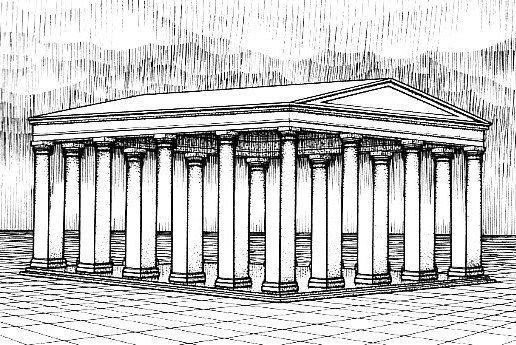
A good example of Gestalt theory can be seen in many optical illusions, where the brain sees a pattern to make sense of an object where the real pattern if very different. For example, when words are miss-spelt in the centre people will often auto-correct or if a word is added to a sentence one too many times this auto-correct also occurs. Here is one example of an optical illusion:
 |
| Optical illusion |
Task 2 - Thinking Game
We worked in pairs, one person would make a simple gesture while the other recorded what that gesture might mean. I worked with Queenie who made the first 3 gestures while I scribed, we then swapped for the final 3 gestures.The gestures:
- A person nods his/her head up and down
- A person’s lower lip trembles slightly
- A person smiles slightly
- A person yawns
- A person shrugs his/her shoulders
- A person inhales quickly
- Nodding head
- yes
- my neck is sore
- I’m stretching
- There is something on the ceiling
- Lower lip trembles
- Sad
- You have an ulcer
- Your disapproving of what is happening
- You pretend to be sad, but you are joking
- nervous
- Slight smile
- Welcoming
- Don’t know what is going on, but your being polite
- You don’t think its funny but you’re being polite
- Your happy
- Yawns
- feeling tried and sleepy
- feeling boring for the topic
- stretching
- Be lazy
- Shrugs shoulders
- telling “I don’t know”
- telling” whatever”
- stretching
- teling” yes, it could be”
- Inhales quickly
- shocking
- suddenly get pain
- scared
- telling “oh my god”
- disbelief
You need to be flexible in the way you see things.
This idea if also true for language, you need to be clear or the consequence can be disastrous:
http://www.youtube.com/watch?v=1DH_oD6n57c
Task 3 - Idea Generation
Further to our collaboration work last week we decided to stay with the same people in the group and continue our exploration and development of the bike helmet cover
My ideas for a helmet cover illustration included:
- Illustrated Teddy Bear holding on, with claws out
- Photo of a fish in a bowl with the water splashing out
- Real hair
- Photo of clouds
- Photo of flowers
- Photo of a Darwin sunset with corporate logo
- Illustrated frogs, lizards, possum, and Territory Wildlife holding onto helmet
- Digital Corporate Logo
- Digital Christmas Theme
I illustrated some ideas:
 |
| Bee in your Bonnet |
This is the "Bee in your Bonnet", inspired by the idea that it can easily be identified.
 |
| Corporate Logo |
The Corporate Logo Option needs to clearly identify the corporation while maintaining the ability to be easily identified by colour.
 |
| Women's cover |
Here I wanted something inoffensive, pretty without being too girly. I used Kuler and looked for French inspired soft colours that were bold enough not to be lost.
Real Expert
In view of our lesson last week I also decided to do an interview with a "real expert".
I met with a cycling friend and we talked about helmet covers.
What I learnt:
- they already exist
- they are called helmet covers
- clubs generally buy them and lend them to competitors when required
- helmet covers are used to identify different teams or skill sets, for example, who based on their time needs to go first to ensure everyone finishes around the same time
I ask "would you buy one?" Since the clubs own them and hand them out, he has not seen a reason to purchase one himself.
Next question "what function/ design would it need to have to make you interested?" The ideas included:
- the ability to carry an iPod with built-in speakers over the ears so you can still hear cars
- a cap that would block ventilation when it is cold
- a visor for sun protection
- a visor over face to protect from bug eating
- cooling gels to keep the head cool
The "real expert" buys his helmet for $150+, they don't come with visors as it's all about the weight and ventilation. There are also Australian Standards to meet.
I'd prefer to have a purpose for the product, a key feature to sell, with this in mind we decided to add pocket.
Pocket Features:
I'd prefer to have a purpose for the product, a key feature to sell, with this in mind we decided to add pocket.
Pocket Features:
- a seamless pocket so as not to disturb the illustration
- located on the side of the helmet because this provides the largest and flattest area so an MP3 player does not protrude from the helmet
- approximately 7.5 heigh and 15 cm long to accommodate an iPhone and speaker cable.
Google search
A Google search for helmet covers shows a very limited selection, we found one design similar to our concept in Britain for 24 pounds!

http://www.e-sciconbags.com/product_info.php?products_id=170&osCsid=c0d2f58e104fde60e7dca72286e92015
Printing
When we design our helmets we would like to print our illustrations on the cover. The illustration must not interfere with the breathability of the cover. It is also crucial that the illustration remains intact when stretched over a helmet.
On calling a local printing company, Moogully (http://www.moogully.com.au/contact.html) we asked if they could print onto lycra, they had tried and failed at this before as the lycra sends to melt. However they are currently trailing a process and will know within the next week if it is possible.
When researching the web we found a company in Australia that does produce printed lycra as seen in the photo below. This could be another option for us to investigate.

The next steps
- Research material to be used
- Draft design pattern
- Research printing options locally
- Continue design illustration for helmet

Superb post here Cherill. You have almost exhausted the possibilities with your research. Great to see you on the case so early in your concept development.
ReplyDeleteThis is a good plan, as sometimes we find out that the original idea is not viable or needs major modification. Gold star for you this week.